Everyone's Working Below Their Pay Grade
By James
The right person on the right task builds the skill and the team. The wrong person on the same task costs the client and builds nothing. I saw both on the same day.
One morning, I was supporting a document review project for a team working on a pharmaceutical matter. An associate with about nine years of experience walked me through the FDA drug application process so I could tag the documents accurately. But she went further, explaining additional nuances to prevent false positives from bogging down her review later. A simple act: sharing what she knew about the case and why the task mattered. Standard collaboration and knowledge transfer. And it pays forward. When support staff understands the purpose behind their work, fewer issues land on the partner's desk, and more of the partner's time is protected for the work that actually needs their attention.
That same day, an associate on a different matter wanted to debate whether we should draft a Custodian of Records ("COR") declaration ourselves for a subpoena to a third party. I explained that a certified deposition officer had already been assigned and was responsible for managing and delivering the declaration in compliance with the California Evidence Code. After reviewing the case files, I confirmed our deposition officer had performed this task correctly.
I politely pushed back. Not because the declaration she wanted to draft was legally incorrect (and I acknowledged that it seemed to be a standard process for this particular team), but because our subpoena case files were filled with blank COR declarations prepared by our firm alongside fully executed declarations prepared either by the witness or the deposition officer. Also, the request was out of step with the proven protocol followed for the entire litigation group across the firm. This was a niche request, appropriate at times, but preparing this document did not provide any additional compliance requirements. Frankly, it was not a smart use of our time or resources.
Still, there we were, debating a task that should have been owned by a non-biller from the outset. It was already under control. The conversation could have been avoided altogether. In the end, she leaned on blunt hierarchy and "it's our usual practice."
Two interactions, same day. One team member providing guidance to streamline the process for herself and her partner. The other, unfortunately, stepping into work that was well in hand and never should have landed on my plate, and definitely not hers.
Not Every Task Requires $1,000/Hour Input
Staffing misallocation occurs when legal team members perform work that does not align with their level of training, skill, or billing rate. From my experience, a common example is senior associates handling tasks that a properly trained paralegal or legal assistant could complete more efficiently and at a more appropriate cost to the client. Routine work such as case file management, information tracking, and coordinating with alternative legal service providers is often absorbed into broader billing narratives. Associates feel pressure to move quickly. Doing the task themselves feels faster than handing it off, even when it isn't.
These tasks matter. But not every routine task requires $1,000/hour input or legal judgment that clients expect from senior associates. When associates spend meaningful time on this work, the firm loses its ability to staff efficiently and protect its margins, and clients absorb higher costs without added value.
Another form of misallocation occurs when associates take on operational responsibilities instead of allowing trained support professionals to own them. This goes beyond who is doing the work and shifts into who is responsible for running it. When ownership moves away from those trained to manage process, efficiency and quality are harder to maintain.
Managing ECF filings, coordinating productions, running quality control on document sets, or supervising vendors without technical depth often leads to slower turnaround, repeated revisions, and poor decisions. Attorneys are trained to analyze and advocate. Litigation support professionals are trained to manage process and workflow. When ownership is unclear or shifted upward, tasks take longer and cost more because the work is being learned instead of executed by someone who does it every day.
Capability Is Not the Same as Proficiency
There is also a cost to sidelining litigation support personnel from areas where they are most efficient. When an associate billing $800 to $1,100 per hour unnecessarily spends time on purely operational tasks, the cost impact is immediate. Ten hours of "managing document review" becomes $8,000 to $11,000. Fifty hours becomes $40,000 to $55,000. This is not a question of capability. The issue is that capability is not the same as proficiency. Operational professionals know the shortcuts in the document management system, understand output sequencing, and follow established best practices because that is their discipline. That difference shows up in revision cycles, deadline compression, and cleanup downstream. Clients expect to pay premium rates for legal judgment. They should not be underwriting a learning curve on operational execution.
Staffing decisions shape associate development whether firms treat them that way or not. When partners hold onto every deposition, including low-complexity examinations that would serve as ideal training opportunities, the downstream effect is predictable: associates with 10+ years of experience but no substantive deposition or trial-examination skills. Those associates often end up handling those same operational tasks to fill their hours. The numbers look fine. But high utilization can mask a lack of growth just as easily as it reflects productivity.
Experienced paralegals or litigation support professionals embedded with the same practice group for well over a decade can find themselves competing for operational case management work, but not against other support personnel. Their competition is often associates. Instead of owning the work their continuity should have equipped them to handle, these professionals absorb administrative tasks like coordinating conference rooms, calling court clerks, and chasing down filing confirmations. This is work that should flow to non-billing staff. When this happens, people can be working one or two levels below where they should be, and the inefficiency compounds across the entire team. This leads to burnout.
When structure breaks down, output can remain high even as quality declines. The billable hours for the team? To quote LD, "Pretty pretty good."
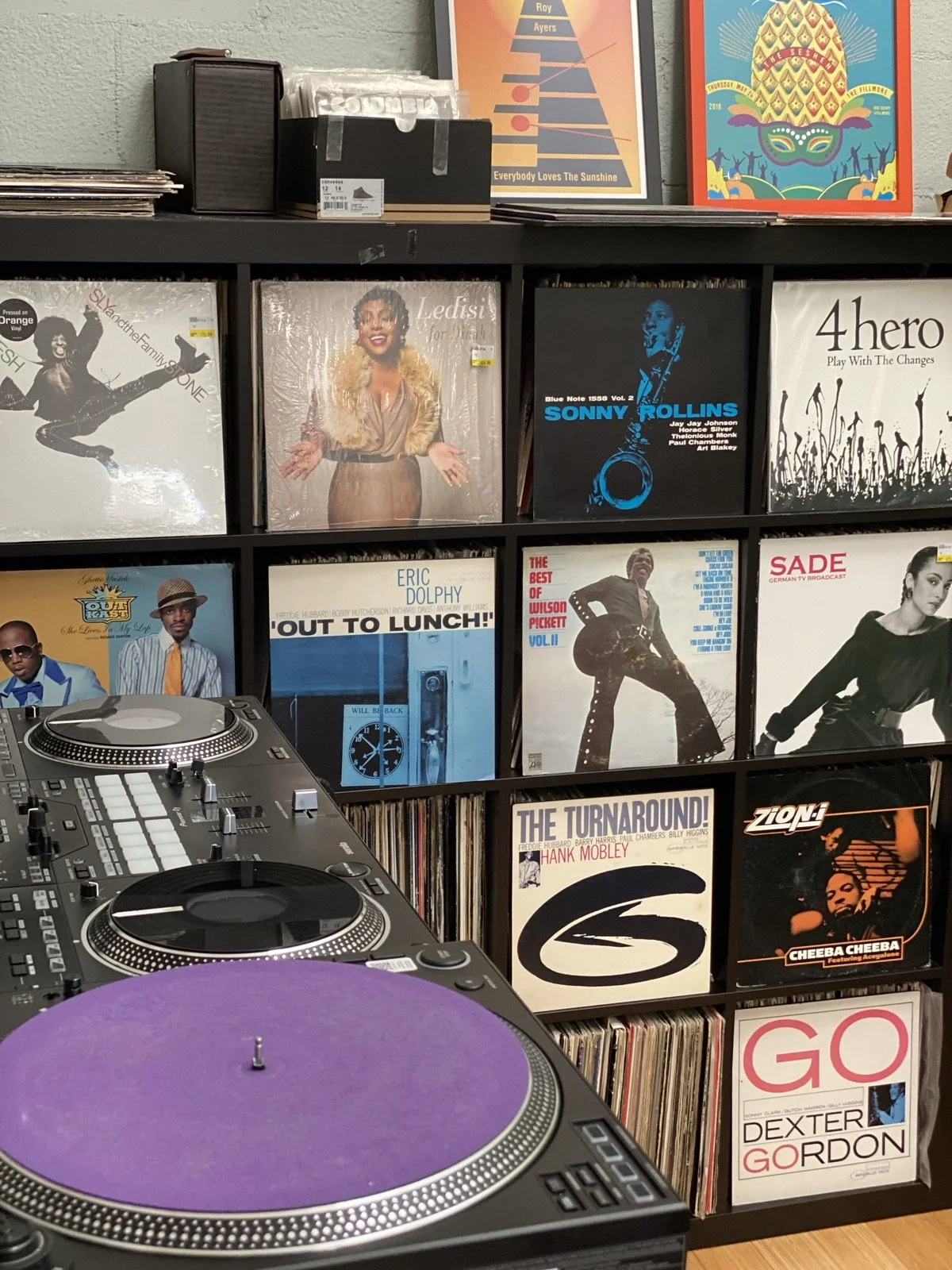
But confusing busy with doing good work is risky. I once asked a DJ if I could listen to any recordings of their live performances. They did not have any. I asked how they knew they were good. They said they must be, because they get booked. The same principle can apply here. High billable hours do not necessarily mean your process is sound.
Ad Hoc Becomes SOP
Poor role alignment, like other forms of misallocation, often shows up in patterns that are easy to normalize.
When key case documents are not centralized or mapped in a source-of-truth tool, fact connections are harder to surface until a draft is under deadline pressure and the client's review introduces questions that should have been addressed earlier. Document productions stall because QC and approval processes were never designed for efficiency. Privilege workflows are inconsistent, so clawbacks become routine. Standard practices go unchallenged because nobody with the right expertise has been given the authority to improve them.
These aren't isolated problems. They are symptoms of the same structural issue: tasks without clear ownership default to whoever is available, not whoever is best equipped. Ad hoc becomes SOP.
It doesn't have to be this way.
Misaligned staffing issues are rarely firm-wide. A partner makes a one-off request for an associate to manage a task better suited for an experienced non-attorney staffer. Maybe it started during a temporary staffing shortage. But because training for support staff is easily deprioritized, the workaround hardens into a standard. Associates are expected to follow it. Nobody questions it.
Imagine a mid-sized dispute with 10-20 witnesses. The partner makes five staffing decisions in the first two weeks. Each decision determines whether the matter is run efficiently or whether it deskills the team and overbills the client.
Strategy and theory of the case → Partner. Not delegable. This is the work the client pays partner rates to receive.
Substantive legal analysis and brief drafting → Associate. The associate's training compounds when they own this work and atrophies when they don't.
Document workflow, production protocols, and vendor management → Case Manager/eDiscovery PM. This is a support role, but also its own discipline, and the trained professional executes it faster, cleaner, and at lower cost.
Privilege review oversight and chain-of-custody documentation → Case Manager, with associate sign-off on substantive privilege calls. Two roles, one workflow. Each owns the part they are trained for.
Status reporting and client communication cadence → Associate drafts, partner approves. The associate builds the client-facing muscle without the partner losing visibility.
The difference shows up quickly. Early on, the case manager works with legal assistants to get the case files organized and set basic naming and storage conventions. They coordinate with the client to establish a clear way to share documents, map local court preferences, including hearing scheduling, and make sure the team is working from consistent pleading templates. They also loop in the right support teams, including eDiscovery, so document and ESI workflows are ready before things scale.
As the case moves forward, key documents, themes, and witness targets are tracked in one place, along with the evolving cast of characters. That continuity makes it easier to maintain quality during discovery and avoids having to redo work later.
Now the associates can stay focused on pleadings, discovery strategy and witness management instead of stepping into operational gaps. The client pays for the right work at the right rate.
One rule is locked in regardless of structure. The litigation paralegal does not get bypassed when eDiscovery training and support are on the table. Whether the role is filled by a trained eDiscovery professional with paralegal background or a senior paralegal case manager working with the firm's internal discovery support team, the principle is the same: if your paralegal is not being trained to handle this work and you continuously look to associates, you are training associates to be paralegals.
Oversight That Builds Trust
In litigation, micromanagement is not always the problem people make it out to be. Sustained micromanagement is. Are there attorneys who are perfectionists or hard to please? Without a doubt. Probably at a higher rate than most professions. But here's the deal. Law firms are owned by lawyers, so even the firm's C-suite officers answer to attorneys. That is the reality. If you're in a support role with direct interactions with attorneys, expect to be micromanaged to some degree at the start. Expect the scrutiny but flip it. Use it to your advantage. Detailed feedback from partners and senior associates is how support professionals learn to anticipate needs and improve efficiency over time. Unnecessary oversight does not go away on its own. If you want less micromanagement, show initiative, learn the work, and take responsibility for getting better at it.
Now revisit the subpoena scenario. The deposition officer was already managing the COR declaration in compliance with the applicable rules and the firm's protocols. This is the point where oversight should give way to trust. There was no need for the associate to debate the process because an experienced professional was already completing the work to standard. Take it one step further: routine logistical tasks like booking a deposition officer for subpoena service are template-driven and should be handled by trained junior paralegals or legal assistants, not senior litigation support personnel, and certainly not senior associates.
If that boundary had been respected, the associate could have redirected that time toward the kind of substantive legal work her experience demands, not unlike the associate from that same morning who invested a few minutes of case knowledge to sharpen an entire workflow downstream.
Role clarity is the mark of a well-run litigation operation.